Powder Metallurgy vs CNC Machining: What Is Different
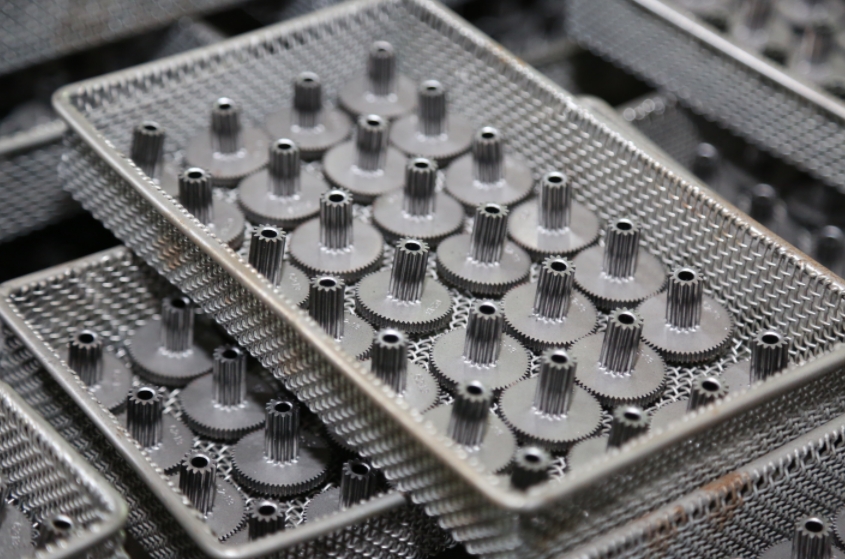
Modern manufacturing often chooses between powder metallurgy and CNC machining. The right answer depends on geometry and quantity.
Powder metallurgy advantages:
Lower cost for complex products: shapes such as gears form easily in a die and run in volume, so cost falls below conventional machining while precision is maintained, which is why PM use in automotive parts is growing.
Special materials: PM can produce materials that are hard to make otherwise, such as pseudo-alloys, porous metals, refractory metals and cemented carbides.
Material savings: as a near-net-shape process using a die, PM greatly reduces machining cuts and material consumption.
Uniform composition: blending powders achieves consistent composition and performance across the batch.
CNC machining advantages:
Productivity for mixed small lots: for many part types with smaller batches, CNC reduces per-part turnaround time.
Stable quality: machined parts hold stable quality and high precision.
High precision and stiffness: CNC machines offer excellent accuracy and rigidity and can select favorable cutting parameters, with productivity well above general machine tools.
Many manufacturers combine the two: PM produces the near-net-shape body, and CNC finishes critical features.
Source: legacy company publication http://www.cnyhpm.com/jishubaike/117.html
Related topics
Talk to Our Engineering Team
If this guide raises questions about your own part, send us the details and our engineering team will review geometry, material and feasibility.